ATS-Friendly Resume Guide 2026: How to Pass Resume Filters and Get More Interviews
1. A New Resume Era Begins in 2026
The hiring world is no longer the simple, familiar process people experienced a decade ago. Companies today manage thousands of applications every month, and manual screening is almost impossible. What recruiters once did by hand is now done by software. This powerful shift has placed the ATS – Applicant Tracking System at the center of the hiring process, silently deciding whose resume moves forward and whose never reaches human eyes. Many job seekers still imagine recruiters reading stacks of resumes one by one, but the reality is that resumes are now sorted, scanned, filtered, and ranked by algorithms long before an HR professional reviews them. This evolution has created a new problem: a resume that looks good to humans may still be invisible to ATS, meaning countless applicants lose opportunities not due to lack of skills, but because their resumes weren’t formatted for machine reading.
In this evolving scenario, writing an ATS-friendly resume has become a potent skill that can completely overhaul someone’s job search journey. Knowing how ATS reads your resume, what it ignores, what it rejects, and what boosts your visibility is the key to unlocking more interview calls. The good news is, such a resume isn’t complicated to make if one approaches it with clarity. Even freshers with limited experience can get shortlisted effectively with a strategic approach. The objective is not to “trick” ATS but to communicate correctly with it, using structure, keywords, formatting, and clarity in ways that make both the software and humans understand your profile.
2. Why ATS Matters More Than Ever

The need for ATS resumes has increased for one simple reason: the competition for jobs is incredibly high. Jobs that previously got fifty applicants now receive hundreds, and even thousands, of applications. Companies use ATS to manage, organize, classify, and shortlist resumes automatically. These systems read your resume line by line and look for relevant keywords, clear job titles, understandable formatting, and structured content.
If these elements are not there, even a strong candidate is filtered out. Most of the job seekers think that their resume was rejected because they were not qualified, while the fact is that the resume simply didn’t get parsed correctly. ATS is not optional – it’s unavoidable, and learning to write a resume that passes these systems is one of the most important career skills. An ATS-friendly resume improves your visibility dramatically because once you pass the automated filter, the chances of a human recruiter reviewing your profile increase significantly.
During the summer, when the temperature in this city has peaked, and being outdoors has become absolutely unbearable.
3. How ATS Reads Your Resume: The Real Mechanism Behind the Screen
Most people think of ATS as a robot that searches for keywords, but actually, it functions like a database system. When you upload your resume to it, the system scans the text in, then parses it into fields such as name, title, skills, experience, and education, and seeks out correlations between your resume and the job description. If your formatting is too creative, uses graphics, unusual columns, text boxes, icons, or fancy fonts, there is a good chance the ATS will misread or not read at all some key information.
This means a resume that is pleasing to the human eye can be incomprehensible to software. ATS reads left to right, top to bottom, using simple parsing logic. It likes plain formatting, consistent headings, chronological structure, and clear wording. Knowing this mechanism will help you design a resume that is friendly not only to ATS but also for recruiters to skim, giving you a powerful advantage in the very first screening stage.
4. Why Creative Resumes Fail and Simple Resumes Win

The biggest change is that plain resumes beat over-designed ones. While quite a few candidates today still opt for templates full of icons, sidebars, graphics, and creative layouts — the type common to design websites — although modern-looking, these resumes are terrible for ATS. The system can’t interpret icons for phone numbers or extract text embedded inside shapes and graphics.
What the ATS really prefers is straightforward formatting: left-aligned text, sensible headings, readable fonts, and logical sectioning. It’s common for recruiters to download ATS-parsed resumes just to see what the system pulled out, and messy resumes equate to broken parsing and missing information. This is why clean, minimalist resumes continue to outperform complicated ones, not because they look boring but because they clearly communicate with both machines and humans.
5. The Role of Keywords and Why They Matter
The very foundation of an ATS-friendly resume is your utilization of keywords. These are not merely random words dropped into a document; they are names of skills, job titles, tools, and experiences that are connected with the job in question. ATS systems scan for these keywords to verify relevance. If your resume doesn’t contain key terms that are stated in the job description, your resume will be given less visibility.
But using too many keywords, or stuffing them unnaturally, also fails because the ATS detects unnatural patterns. The goal is to weave keywords organically into your experience, responsibilities, and achievements. For example, instead of listing “communication skills,” a stronger way is to show a situation where communication played a crucial role. This natural integration helps the resume pass through both ATS and human review. Keywords give context to your resume to help the system understand who you are and what kind of role you fit.
6. Understanding Resume Structure for ATS
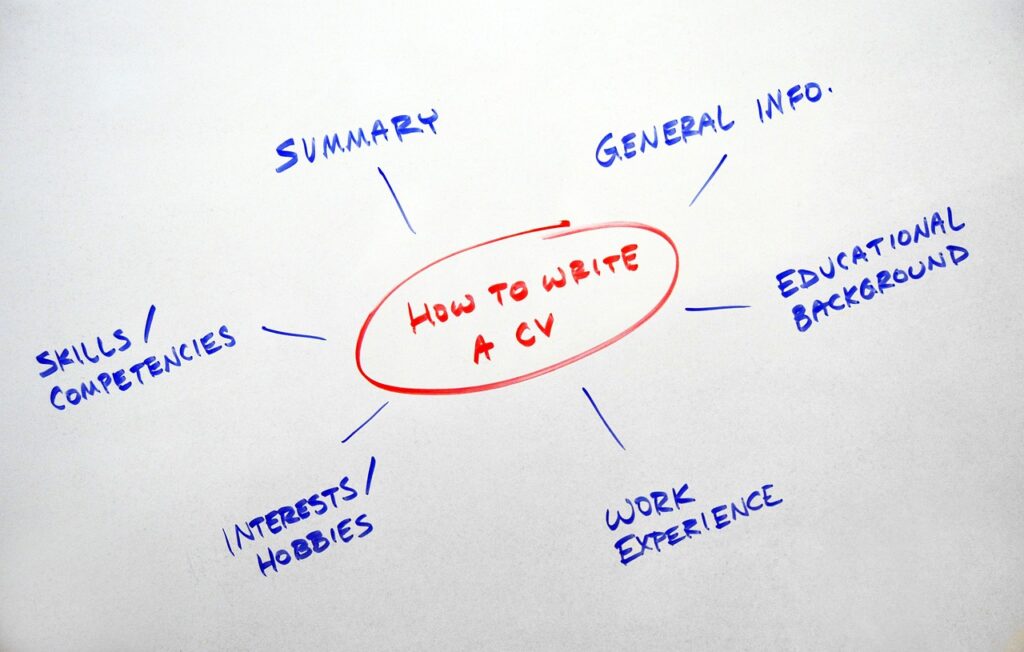
A successful ATS resume requires a structure in which software can process information with ease. This generally consists of a clear header, summary, work experience, skills, education, and certification sections. When intelligently built, such sections guide the ATS through your resume with smoothness.
Your header has to have the correct contact information. Your summary should highlight your core skills and career direction. Experience has to be detailed using action verbs and measurable outcomes wherever possible. Skills listed should be relevant to the job as well as the tool or ability. Education should be simple and clear. Certifications bring credibility, especially in competitive fields. A uniform structure makes your resume machine-readable while allowing the impactful storytelling to human recruiters.
7. The Importance of Action Verbs and Impact Statements
ATS-friendly resumes are not lists of responsibilities but are built around strong action verbs like “managed,” “implemented,” “executed,” “led,” “analyzed,” or “optimized,” signaling ownership and results. The ATS identifies these words and categorizes accordingly.
Quantifying results, such as through the use of metrics, or describing outcomes in impact statements, further strengthens your profile. Rather than saying “responsible for customer support,” a better sentence would be, “Resolved customer queries with a focus on improving satisfaction and reducing response time.” Such statements show contribution and effectiveness, making the resume more compelling during both ATS and human review.
8. Why Your Resume Format Must Match Your Career Stage
Many people use the same format for their resumes, regardless of their experience level. In 2026, personalized formatting matters. Freshers need to have a skill-focused resume, while experienced professionals keep the focus on job achievements; career-switchers bear a mix of both relevant skill sets and transferable experiences in a hybrid format.
ATS understands the structure you choose and then matches it with job expectations. A resume reflecting your career stage is easier to parse, more relevant, and far more effective. Understanding your stage helps in highlighting the right aspects of your profile, therefore increasing your chances of being shortlisted.
9. Creating a Summary That Speaks to Both ATS and HR
Your resume summary is the most important three to five lines in the entire document. It sets the tone for the rest of your profile and helps the ATS categorize your resume correctly. Such a summary should not be generic but a sharp, focused introduction that blends experience, skills, and goals.
recruiters prefer summaries that feel human yet structured. What one is looking to achieve is a summary that incorporates relevant keywords naturally and authentically. With this balance, you are sure of attracting the attention of both the ATS and human interest, ultimately increasing your chance of proceeding in the employment pipeline.
10. The Skills Section as a Strategic ATS Tool

The skills section is not a filler; it’s a strategic section that heavily relies on ATS. Most ATS systems extract skill keywords and match them directly with the job description. If your skills are outdated or irrelevant, your ranking in the resume drops. If they are properly aligned with the needs of the job, your resume moves upward.
The key is in the selection of your skills, where you’ve truly reflected your expertise and matched the role. Hard skills generally matter more than soft skills in ATS selection, but after passing the system, soft skills continue to matter for HR. A balanced skills section comprises relevant tools, technologies, and strengths that create a significant impact during ATS scanning.
11. Education and Certifications That Strengthen ATS Ranking
Your educational background is obviously an important part of your resume, but, add certifications that carry even more weight-especially in competitive roles where extra qualifications set you apart. Recognized certificates are picked up by ATS systems and categorize your resume as such. Adding certifications relevant to your field-be it in marketing, HR, operations, design, analytics, or sales-helps the system recognize you as a stronger fit.
12. Crafting the Ideal ATS Resume Format for the Year
the resume format you choose has a direct impact on your shortlist chances. A clean, chronological layout remains the most ATS-compatible because it organizes your information in a way the system can follow. It starts with your header, summary, skills, experience, education, and certifications. This sequence feels natural to the machine, but more importantly, it makes the recruiter’s job easier because they can scan your story quickly.
As you start constructing your format, visualize your resume not as a document divided into sections, but as a structured narrative. Each section would blend into the next with clarity and purpose. Your summary introduces you, your experience proves your capabilities, your skills support your experience, your education provides the foundation, and your certifications validate your ongoing learning. This simple structure eliminates much confusion for ATS and gives that sense of balance that recruiters appreciate. You are conveying not only information but also professionalism through structure.
13. Writing the Resume Summary That Sets the Tone
a resume summary must do more than state your profession; it needs to establish confidence, clarity, and direction. These few lines are the headline of your career story. They allow ATS to categorize your profile correctly, but they also serve as the beginning of the first impression made on the human recruiter. It should reflect your major strengths, key competencies, and the kind of role you’re applying for, all without sounding generic.
A powerful summary is a mix of human warmth and keyword awareness. Instead of stating that you are a “hardworking individual seeking opportunities, a better way is to state your value proposition. Statements that describe your approach, your strengths, your mindset, and your results ring truer. When the recruiter reads your summary, they should instantly know who you are and what you do. The summary then becomes an anchor to the whole resume, guiding the reader’s expectation and turning scattered pieces of information into a single identity.
14.Showcasing Experience in a Way ATS and HR Both Understand
The experience section is the core of your resume. ATS systems scrutinize this part more strongly because experience is the strongest indicator of job fit. But human recruiters also heavily depend on this section, so it needs to answer the needs of both readers-software and people. The challenge is to describe your responsibilities and achievements with clarity, relevance, and a sense of progression.
Every sentence under your experience should start with a strong action verb, followed by the task at hand you handled, and preferably ending with the impact you created. Resumes that only list responsibilities are boring, while those that focus on measurable improvements are dynamic. Even when your job didn’t involve numbers, there is always a way to show impact through words. Saying you “helped customers solve issues” is ordinary, but saying you “guided customers with empathy, improving satisfaction and reducing escalations” feels richer, and more human. This kind of writing shows a better picture and helps ATS detect meaningful patterns.
15. Creating a Skills Section to Complement Your Experience
The skills section is largely misunderstood, and people tend to fill it with random skills or soft traits that are valueless in nature. ATS places a high emphasis on skills because it categorizes resumes based on those skills and then matches them against the job descriptions. The thing is-alignment. Your skills should be reflective of your strengths but also in alignment with the role you’re applying for. A well-crafted skills section feels intentional. It tells a recruiter what you bring to the table, and it reassures ATS that you have the capabilities needed to perform the job.
The best skills sections merge your technical abilities with your role-specific strengths and workplace habits. They become a bridge between experiences and job descriptions. When ATS scans this, it looks at the familiar terms; when recruiters scan it, they look for authenticity. And the sweet spot is where your skills section feels precise, relevant, and truthful, acting as a support pillar to your whole profile.
16. The Education Section and Its Real Value
While education remains important, what employers want skills, attitude, and adaptability rather than strict degrees. Your education section should be listed cleanly, including your institution, degree, and year of completion. This section is not meant to dazzle but rather to confirm where one has come from.
Of course, education becomes far more powerful with the addition of certifications, online courses, workshops, or specialized trainings. Each of these additions tells the recruiter that you’re a learner, that you invest in personal development. The ATS also values recognized certifications because they are filled with keywords that coincide with job descriptions. For instance, certifications in marketing, HR, analytics, communication, or software tools can boost your visibility tenfold.
17.The Power of Modern Certifications in Boosting ATS Visibility
strongly rewards candidates for continuous learning. Certifications play a huge role in enhancing the relevance of your resume to the ATS systems. The moment one finishes a reputed course, it adds depth to your profile and makes your resume keyword-heavy. Let’s say a person is applying for operations jobs; he may highlight certifications in supply chain, Excel, or project management. A candidate applying for marketing jobs may share digital marketing courses, branding workshops, or analytics training.
Certifications prove your commitment to growth. They show that you stay updated with industry standards. ATS scans these words and categorizes your resume more accurately. Recruiters see them as signals of seriousness and dedication. Even a single certification can make you stand out among hundreds of applicants. In competitive fields, certifications are not optional; they are strategic assets.
18. Common Resume Errors That Cause ATS Rejection
Simple mistakes cost many candidates opportunities, while sometimes they do not even realize that their resume was rejected by a machine long before a human had a chance to read it. Using images, decorative fonts, complex tables, or unnecessary graphics in your resume makes it unreadable for ATS. Others use job descriptions that are vague, have missing important keywords, or write responsibilities without context.
Another common mistake is using inconsistent formatting throughout different sections. ATS relies on patterns, so when one section uses bullets and another uses dashes, or even when headings are inconsistent, the system may misinterpret your data. Even spelling errors affect ATS because wrong spellings break keyword matching. attention to detail is not optional-it’s key. A clean resume free of formatting distractions gives you a major advantage.
19.Matching Your Resume With the Job Description

The most powerful approach is to tailor your resume to the job description. ATS systems compare your resume directly against the job posting. If a job description says “customer support” and your resume says “client interaction,” the match score goes down. Using similar language to the job description helps the ATS find you as the perfect fit.
Tailoring a resume doesn’t mean rewriting your experience for every job application; it means highlighting the most relevant keywords and responsibilities for that particular application. A tailored resume greatly increases your likelihood of selection. This is because recruiters prefer candidates showing alignment and preparation. Even small adjustments may lead to big results.
Until recently, the party or candidate receiving the most votes obtained all of those electoral votes, except in Maine and Alaska.
20. Crafting ATS-Friendly Achievements Without Sounding Robotic
Achievements bring your resume to life, showing the impact-not tasks. However, achievements do need to be written naturally. So many job seekers force the numbers in or exaggerate details; it feels robotic and not believable. the best achievements will be authentic, clear, and human.
Even in case quantification of outcomes is impossible to provide, it’s still possible to describe those situations where your contribution mattered. You’re able to underline improvements, positive feedback, team support, or moments of learning. These human aspects lift your resume and help the recruiter imagine you in their role. ATS will recognize verbs and structures, and humans will recognize stories. A combination that makes your resume memorable and trustworthy.
21. Final Resume Polish:
Making It ATS-Safe and Human-Friendly Once you have built your resume, the last thing is refining it. This will involve looking at the formatting and removing any unneeded design elements, examining spacing, making sure headings are consistent, and proofreading every word. ATS reads a resume in a logical order, so make sure your sections are appropriately named. Recruiters skim fast, so use clean spacing and clear section breaks. The aim is to have a resume which is simple yet impactful. A resume that speaks confidently without shouting. A resume which the ATS will be able to read correctly and the recruiter will appreciate instantly. This balance is the true key to more interview calls in 2026. –
22. Why an ATS-Friendly Resume Can Change Your Entire Career Path
Once mastered, the job search becomes easier, faster, and more successful. You don’t miss opportunities because of some formatting errors, and you actually get viewed by real recruiters. An ATS-friendly resume puts you ahead of thousands who apply blindly. It makes your career story visible. It increases your interview chances. It boosts your confidence. making a resume is not just about preparing a document; it’s a tool for life change. When done well, it opens doors that seemed impassable. It reveals your capabilities to the world. It bridges where you are and where you want to be.
23. Closing Thoughts:
Your Resume Is Your First Impression — Make It Count Your resume is more than just a list of experiences; it’s the first impression of who you are in the corporate world. Understanding ATS is not optional; it’s required, as competition intensifies and technology controls stage one of the screening process. Writing a resume that respects the machine and the human creates a document that will truly work for you. You increase your visibility, enhance your chances, and stand apart from the crowd. A flowing resume, strong in language and reflecting authenticity, combined with the logic of ATS, is your strongest asset. And with the right approach, every job opportunity is reachable, every application becomes meaningful, and every interview becomes a possibility.